Abstract
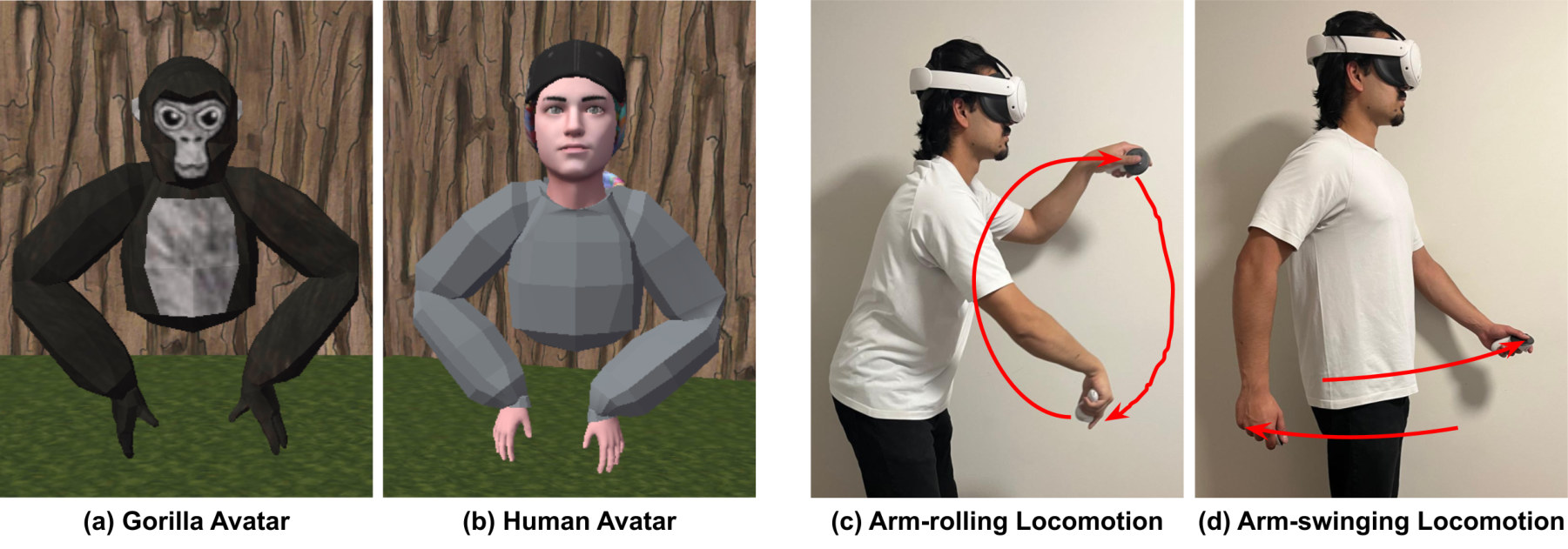
As virtual reality (VR) continues to expand, particularly in social VR platforms and immersive gaming, understanding the factors that shape user experience is becoming increasingly important. Avatars and locomotion methods play central roles in influencing how users identify with their virtual representations and navigate virtual spaces. However, little is known about the impact of congruence between these two factors. We conducted a user study with 30 participants, employing two avatar types (human and gorilla) and two locomotion methods (human-like arm-swing and gorilla-like arm-roll), to assess the effects of avatar-locomotion congruence. Our results indicate that congruent avatar-locomotion conditions enhance avatar identification and user experience.